The Truth About Plastic Bags

Humans also make cities which are pretty detrimental to the environment.
Detrimental to who is the interesting question.

I like how some people say, "that is man made", but if you believe man came from nature (either evolution or creation by a superior power) then man is part of nature, and a city is as much non-nature as an anthill or beaver dam.


Fine, fine.

Reusable bags for shopping.

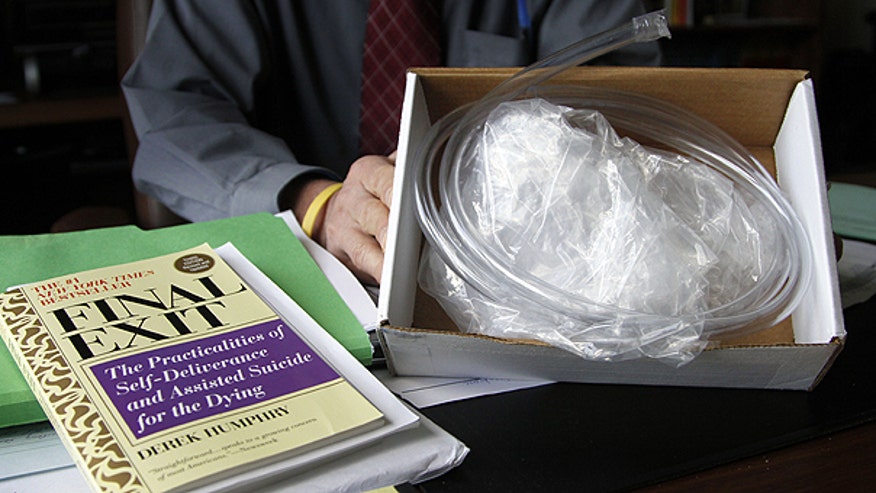
But there are some situations where you really want a brand new plastic bag.

061311_suicidekit604.jpg
 
I was a hater of the plastic bag ban in my city at first to. I also hate grocery shopping enough as it is. Then I discovered the awesomeness of backpack shopping. With the bags banned they can't stop ya from wearing a backpack but if an employee sees you walk in with a backpack they call a code thinking you might be a shop lifter and an employee will follow you around and keep asking you if you need help. Just say hell yeah and give them your shopping list like a boss. They figure out in the first 30 seconds youre not a theif but have to follow you until you leave anyways. They know exactly where everything is at and all the good deals. It's like a personal shopper. In and out in 10 minutes! It's the greatest thing ever.

Bluehat style. :thumbsup:
 
I have a genuine question for which I will use an example taken to the extreme to test your principle:

Let's say that most people on earth like to consume a particular substance from which a by-product is created that reduces the amount of air available to breathe. Let's say that it is clearly determined at what point air will run out and everyone will die. In this case would it still be right to allow these people to continue to choose - to have the freedom - to consume this product? Or would it be right to use force to stop them doing so?

Perhaps the real question here is, when do a person's actions become their responsibility such that force is justified. E.g. If a man attacks another man, use of force by the second is justified. So if a bunch of people ruin a lake by leaving plastic bottles in it, what is justified against them? Direct/Indirect etc.
 
As the article below points out, this will cause an increase in garbage bag sales. They also mention how creating a cotton bag uses 173 times more energy.

RealClearScience - Plastic Bag Bans: Another Feel-Good Eco-Fad

Good article. It's amazing how some mistruths keep getting repeated and repeated.

For anyone who lives in a Stalinist anti-platic bag city, these are good:

[ame=http://www.amazon.com/T-shirts-Carry-out-13micron-Plastic-Grocery/dp/B00506XVSW]Amazon.com: 1000ct Large T-shirts Carry-out Thank You Bags 11.5" X 6.25" X 21" 13micron .51mil Plastic Grocery Thank You: Kitchen & Dining[/ame]

I bought a box and love them.
 
I have a genuine question for which I will use an example taken to the extreme to test your principle:

Let's say that most people on earth like to consume a particular substance from which a by-product is created that reduces the amount of air available to breathe. Let's say that it is clearly determined at what point air will run out and everyone will die. In this case would it still be right to allow these people to continue to choose - to have the freedom - to consume this product? Or would it be right to use force to stop them doing so?

That's an extreme example. But yeah, they would be initiating violence. It's like asking "if someone is strangling me would I be allowed to use force to stop them?"

Perhaps the real question here is, when do a person's actions become their responsibility such that force is justified. E.g. If a man attacks another man, use of force by the second is justified. So if a bunch of people ruin a lake by leaving plastic bottles in it, what is justified against them? Direct/Indirect etc.

People own themselves and their property. They have the right to defend both. You can use other means besides violence to defend yourself. Under our current system it'd be a matter for civil courts. In a stateless society you'd most likely have private defense resolution organizations - or something similar, whatever the market produces.

I assume you're asking in terms of a stateless society.

If one man attacks another with violence, then the victim has the right to defend himself using necessary force.

The lake example would be a property rights issue. If multiple people own the lake, and someone starts polluting it - they have the right to file a civil suit against that person, most likely requesting cleanup and compensation for any damages.

If he refuses to comply - he'll likely be punished by the community denying him access to roads, shops, credit cards, etc. until the situation is resolved.

I think it's a great question and worthy of a proper response - there are members here who could do a much better job answering the question - as well as entire books written on this topic.

It's a deep rabbit hole.

A good start would be digging through here...

Subject: Property

And Stefan Molyneux gives some good ideas on how dispute resolution would work in a stateless society here...

http://www.freedomainradio.com/free/books/FDR_5_PDF_Practical_Anarchy_Audiobook.pdf

Short answer - you have the right to defend yourself with force if force is initiated against you. Most aggressions like theft and property damage would most likely be a civil matter.

Hope that helps.

 
Let's say that most people on earth like to consume a particular substance from which a by-product is created that reduces the amount of air available to breathe. Let's say that it is clearly determined at what point air will run out and everyone will die. In this case would it still be right to allow these people to continue to choose - to have the freedom - to consume this product? Or would it be right to use force to stop them doing so?

Would you use it? Would you support companies that actively participate in this business? Do you think other people would have concerns about supporting them?
 
Would you use it? Would you support companies that actively participate in this business? Do you think other people would have concerns about supporting them?

I think for the sake of this example it doesn't matter. I simply want to test the principle. What if it only takes a small minority of what we could call 'idiots' to continue choosing to consume this product, such that air then runs out? What does everyone else do then?

Ultimately: is force justified in this example?
 
I was a hater of the plastic bag ban in my city at first to. I also hate grocery shopping enough as it is. Then I discovered the awesomeness of backpack shopping. With the bags banned they can't stop ya from wearing a backpack but if an employee sees you walk in with a backpack they call a code thinking you might be a shop lifter and an employee will follow you around and keep asking you if you need help. Just say hell yeah and give them your shopping list like a boss. They figure out in the first 30 seconds youre not a theif but have to follow you until you leave anyways. They know exactly where everything is at and all the good deals. It's like a personal shopper. In and out in 10 minutes! It's the greatest thing ever.

Absolute standard Eli classic! haha :)